
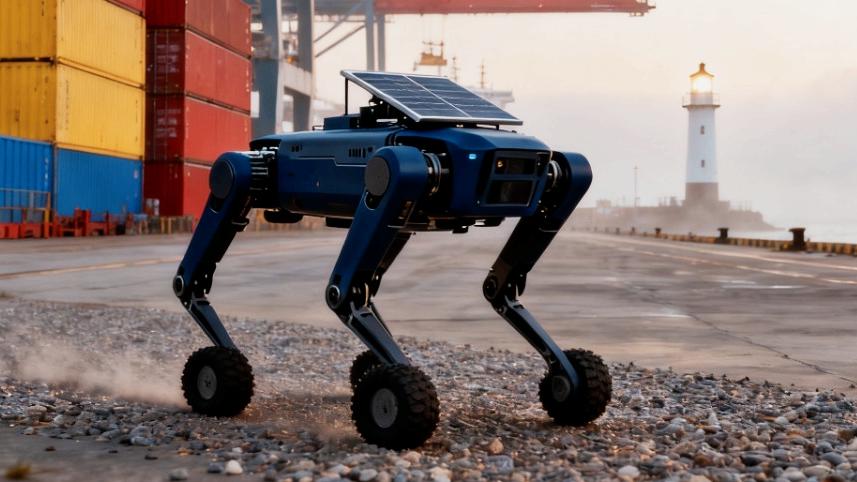
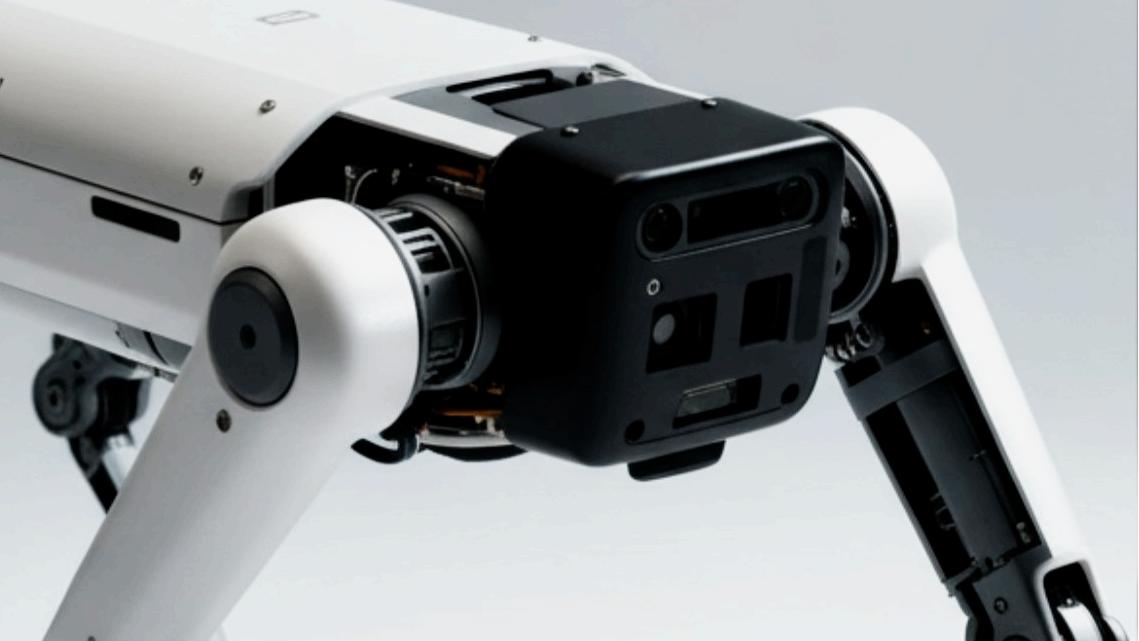
Quadruped Robots

Quadruped Robots (e.g., Bionic Robotic Dogs)


Cerebellum (foundational locomotion and balance):

Typically utilizes an embedded ARM CPU to run reinforcement learning inference models, achieving a 1kHz execution frequency. It processes data from joint encoders, the IMU, and foot sensors in real-time, computing torque output for each leg at high speed to maintain dynamic balance and withstand disruptive impacts.


Brain (high-level decision-making and cognition):

The Brain handles environmental perception and understanding, enabling navigation and path planning to identify and circumvent obstacles. It also executes advanced tasks such as "patrol," "follow," or "locate a target object." Common industry solutions include: Option 1) A compact computing unit (~100 TOPS) primarily responsible for perception and navigation; Option 2) An external, high-compute unit (200+ TOPS) suitable for perception and navigation in complex outdoor environments.


Our Solution:

Cerebellum: Utilizes the T40, an 8-core ARM-based Cerebellum, combined with a real-time operating system, EtherCAT, and CAN FD to create a fast-response controller that ensures the robot's motion stability.

Brain: Integrates the high-compute perception and decision-making capabilities of the T200 (200 TOPS) or T300 (300 TOPS) Brain units to enable fully autonomous operation.